Technology & Compliance Track
Voice AI in Healthcare: Clinical Applications, Workflow Efficiency, and HIPAA Compliance
AI adoption in healthcare is growing fast, and the reason is economic. Every cost in a practice is rising while staffing gets harder, and AI is the first tool in a generation that lets a clinic absorb more volume without adding headcount. This session starts there — with the actual workflow math — before turning to the part almost nobody is teaching.
Attendees see where Voice AI genuinely earns its place: answering and triaging calls, booking and rescheduling, running intake, generating documentation and SOAP notes, and handling reminders and recall. The framing throughout is that automation should buy back staff time, not eliminate staff — time that gets redirected into insurance claim follow-up, patient reactivation, and the in-office experience that actually drives retention.
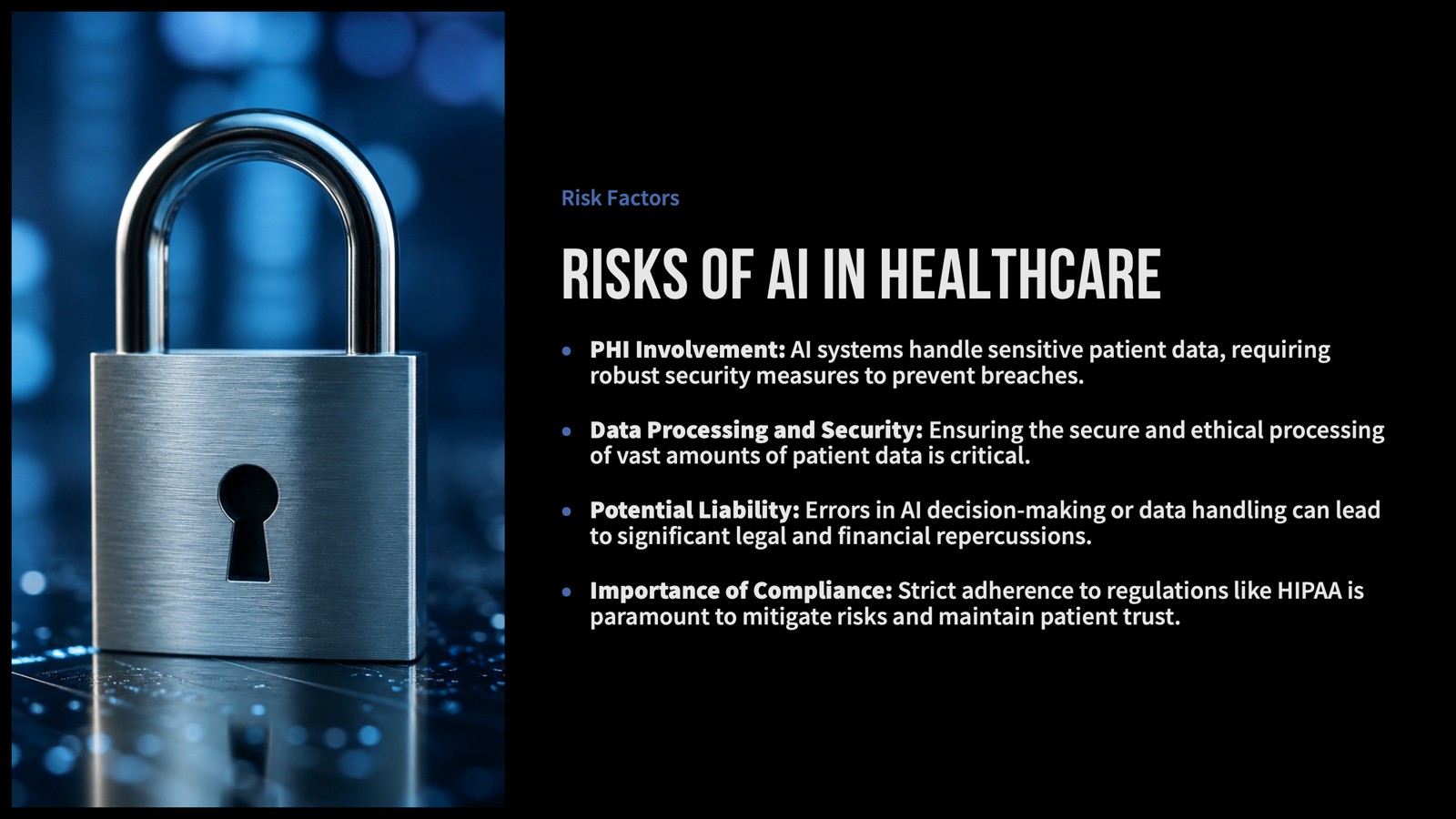
The back half is compliance, taught by someone who works inside the data every day. What counts as Protected Health Information once a patient speaks. How voice data is captured, stored, and transmitted, and who touches it along the way. What the HIPAA Privacy and Security Rules actually require of an AI vendor. Why a Business Associate Agreement is non-negotiable, and how to tell a compliant vendor from one that simply says it is. Attendees leave with a vendor evaluation checklist and a safeguards list they can apply to the tools already running on their front desk.
Learning outcomes
- Define Voice AI and describe its primary applications in healthcare settings
- Identify use cases across documentation, patient communication, and administrative workflow
- Quantify where automation returns staff hours and how that capacity is best redeployed
- Explain core HIPAA Privacy and Security Rule requirements as they apply to voice data
- Recognize the risks AI tools introduce in data storage, transmission, and third-party access
- Evaluate whether a Voice AI vendor is HIPAA-compliant, including the role of a BAA
- Implement basic safeguards that reduce compliance risk in a live practice
- Distinguish compliant from non-compliant Voice AI use through applied case scenarios