
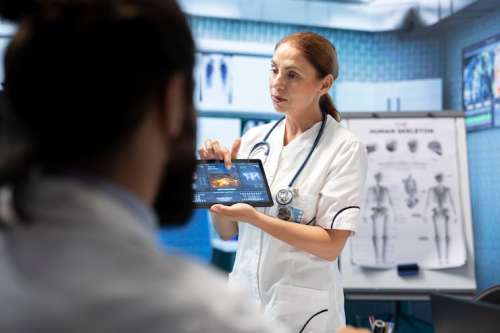
Healthcare practices are under increasing pressure to deliver better patient experiences while managing administrative demands that can pull teams away from higher-value work. Scheduling requests, follow-ups, documentation tasks, patient communication, and routine operational processes all require attention, yet many practices are still relying on manual workflows to keep everything moving. Intelligent automation in healthcare is becoming an important way for clinics to improve consistency, support staff, and create more efficient operations without losing the personal connection patients expect.
Intelligent automation combines software capabilities, data workflows, and artificial intelligence to help organizations complete repetitive tasks more efficiently. For healthcare practices, the goal is not simply to automate tasks for the sake of technology adoption. The focus is on removing unnecessary administrative friction so providers and teams can spend more time on patient care and practice priorities.
Many healthcare leaders are exploring automation because traditional workflows often create bottlenecks. A front desk team may need to balance incoming calls, appointment changes, patient questions, follow-up activities, and internal coordination at the same time. When these responsibilities compete for attention, important tasks can become harder to manage.
Modern healthcare automation focuses on supporting the people who run practices every day. Instead of replacing human judgment and relationships, well-designed systems can help teams organize information, respond faster, and create more reliable processes.
Top chiropractic practices lose patients due to inconsistent follow-ups, disrupting flow and stalling revenue. Take charge of your practice’s growth. TrackStat’s EHR-integrated automation and intelligent task prioritization streamline engagement, maximize retention, and keep schedules full without added stress. See how TrackStat empowers your team to retain patients and grow seamlessly. Schedule your risk-free demo today
The Shift From Manual Tasks to Smarter Healthcare Workflows
Administrative workload remains one of the biggest operational challenges for independent practices. Teams often spend significant time handling tasks that are necessary but repetitive, including appointment coordination, patient reminders, communication requests, and workflow tracking.
Healthcare workflow automation helps practices create structured processes that reduce unnecessary manual steps. For example, automated systems can help identify which tasks require attention, organize patient engagement activities, and provide teams with clearer visibility into daily priorities.
The most effective automation strategies are built around real practice needs. A successful approach starts by understanding where staff spend time, where communication breaks down, and where patients may experience delays. Automation works best when it improves existing workflows rather than adding another disconnected system for employees to manage.
TrackStat approaches automation from this operational perspective by helping chiropractic and related healthcare practices use technology to improve patient tracking, engagement, and workflow management. The platform was developed with insight from practice owners who understand the operational challenges clinics face firsthand.
How AI Is Changing Patient Communication and Front Desk Operations
Patient communication is one area where intelligent automation is creating new opportunities for healthcare organizations. Patients expect convenient access to information and scheduling options, while front desk teams need tools that allow them to focus on in-office responsibilities.
An AI virtual receptionist can help practices manage common communication needs by responding to routine inquiries, assisting with scheduling workflows, and supporting after-hours interactions. For chiropractic and physical therapy clinics, this type of technology can serve as an additional operational resource rather than a replacement for personal service.
Jaz AI is designed as a 24/7 AI virtual receptionist for chiropractic and physical therapy clinics. It can answer inbound calls, support scheduling and rescheduling based on office rules, provide answers from office-approved information, and connect with clinic workflows. The goal is to help practices reduce missed opportunities from unanswered calls while allowing staff to focus on patients who are already in the office.
A well-designed AI receptionist should also operate within appropriate boundaries. For example, automation should follow established office policies for scheduling changes and know when a conversation should be transferred to a team member. Healthcare organizations should also evaluate privacy protections, security controls, and vendor agreements when implementing technology that interacts with patient information.
Why EHR-integrated Automation Matters for Healthcare Practices
One of the biggest challenges with healthcare technology is disconnected systems. Practices may use separate platforms for communication, scheduling, marketing, and patient management, creating gaps between the tools staff rely on every day.
EHR-integrated AI automation focuses on connecting operational activities with the systems practices already use. When workflows are connected, teams can reduce duplicate work and create a clearer picture of what actions need to happen next.
For example, an AI receptionist that works with a clinic’s EHR or practice management environment can support scheduling workflows according to the office’s settings. This creates a more consistent experience because automation follows the same operational rules the practice has established.
Healthcare technology decisions should always include privacy and compliance considerations. HIPAA, the Health Insurance Portability and Accountability Act, establishes requirements for protecting Protected Health Information (PHI). Practices using digital tools should evaluate safeguards such as access controls, encryption, audit capabilities, employee training, written privacy and security policies, and appropriate vendor agreements.
This is not legal advice. Healthcare organizations should consult qualified legal or compliance professionals when evaluating HIPAA obligations, conducting risk assessments, or selecting technology vendors.
Automation Can Support Better Patient Engagement
Patient engagement is not limited to appointment reminders. Strong engagement requires consistent communication throughout the patient journey, including follow-up activities, retention efforts, and timely outreach.
Patient engagement automation helps practices create repeatable processes that support communication without requiring staff to manually manage every interaction. This can allow teams to spend more time on conversations that require personal attention while automated workflows handle appropriate routine activities.
For healthcare providers, the value of automation comes from improving consistency. A structured system can help practices identify opportunities for follow-up, maintain organized communication processes, and reduce the chance that important operational tasks are overlooked.
Independent practices are increasingly looking at automation as a way to strengthen operations while maintaining the relationships that make smaller healthcare organizations valuable. The technology should support the practice’s approach to care, not create additional complexity.
The Business Impact of Reducing Administrative Friction
Intelligent automation can influence more than efficiency. By reducing repetitive work, practices may create additional capacity for patient care, improve team focus, and build more predictable workflows.
Industry examples demonstrate how automation can improve operational performance. Healthcare IT News reported that some clinics using ambient AI documentation tools reduced daily documentation time by roughly 40 percent, allowing providers to close charts faster and potentially increase capacity. AI scribes driving higher throughput and revenue in clinics illustrates how targeted automation can address specific workflow challenges.
Other healthcare automation applications focus on administrative operations, including communication, scheduling, and patient support. AI-powered contact center solutions can help practices handle common requests while allowing staff to focus on more complex responsibilities. AI solutions reducing administrative burdens in private practices highlights how automation can support smaller healthcare organizations facing operational pressure.
The broader lesson is that automation works best when it addresses a specific problem. Practices should begin by identifying workflow challenges, evaluating available solutions, and measuring whether technology improves daily operations.
What Healthcare Leaders Should Consider Before Adopting Automation
Successful automation requires more than selecting a software platform. Healthcare leaders should consider how technology fits into their existing processes, staff responsibilities, and compliance requirements.
Start with Operational Challenges
The best automation opportunities are usually found in repetitive tasks that consume staff time. Practices should review where delays occur, which processes require frequent manual effort, and where communication gaps affect the patient experience.
Prioritize Security and Compliance
Any technology handling healthcare information should be evaluated carefully. Practices should review vendor security practices, confirm appropriate agreements are in place when required, conduct regular risk assessments, and provide staff training on privacy and security procedures.
Choose Automation That Supports Staff
Automation should make work easier, not create uncertainty. Solutions that integrate into existing workflows and provide clear guidance are more likely to support adoption across a healthcare team.
Healthcare practices are moving toward intelligent automation because operational challenges are becoming more complex. From patient communication to scheduling and workflow management, automation provides an opportunity to create more organized, responsive, and efficient practices.
For clinics exploring the next generation of healthcare operations, the most valuable automation solutions will be those that combine technology with a clear understanding of how practices actually work. Intelligent automation is not about removing the human element from healthcare. It is about giving healthcare teams better tools to deliver a stronger patient experience.
Frequently Asked Questions
What is intelligent automation in healthcare and why are practices adopting it?
Intelligent automation in healthcare uses software, data workflows, and artificial intelligence to help practices reduce repetitive administrative tasks and improve daily operations. Healthcare practices are adopting these solutions to support staff, improve workflow consistency, and create more time for patient-focused activities.
How can healthcare workflow automation improve patient communication and front desk operations?
Healthcare workflow automation can help practices manage routine communication, scheduling tasks, and follow-up activities more efficiently. AI virtual receptionist solutions can support common patient questions, scheduling workflows, and after-hours interactions while allowing front desk teams to focus on patients and more complex requests.
How should healthcare practices evaluate AI automation tools for HIPAA and patient data protection?
Healthcare practices should evaluate AI automation tools based on privacy and security safeguards designed to protect Protected Health Information (PHI). HIPAA includes the Privacy Rule, Security Rule, and Breach Notification Rule, and practices should review access controls, security measures, vendor agreements, risk assessments, and compliance requirements with qualified professionals. This is not legal advice.
Disclaimer: The above helpful resources content contains personal opinions and experiences. The information provided is for general knowledge and does not constitute professional advice.
You may also be interested in: Enhancing Your Chiropractic Practice with Real-time Patient Tracking
Top chiropractic practices lose patients due to inconsistent follow-ups, disrupting flow and stalling revenue. Take charge of your practice’s growth. TrackStat’s EHR-integrated automation and intelligent task prioritization streamline engagement, maximize retention, and keep schedules full without added stress. See how TrackStat empowers your team to retain patients and grow seamlessly. Schedule your risk-free demo today
Powered by flareAI.co
