
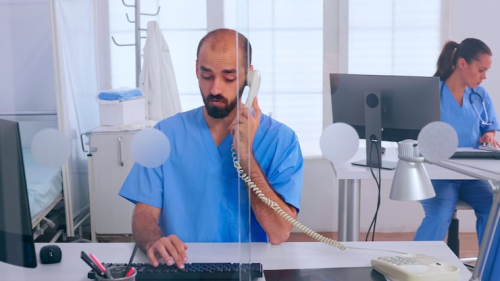
Chiropractic clinics depend on reliable communication to keep schedules full, support patient relationships, and help front desk teams stay focused. When every phone call represents a potential appointment request, question, or scheduling need, the way a clinic handles inbound communication can have a direct impact on daily operations. Many practices are now comparing an AI receptionist for chiropractic clinics with a traditional answering service to determine which approach better supports modern patient expectations.
Top chiropractic practices lose patients due to inconsistent follow-ups, disrupting flow and stalling revenue. Take charge of your practice’s growth. TrackStat’s EHR-integrated automation and intelligent task prioritization streamline engagement, maximize retention, and keep schedules full without added stress. See how TrackStat empowers your team to retain patients and grow seamlessly. Schedule your risk-free demo today
Why Chiropractic Clinics Are Reconsidering Traditional Answering Services
Traditional answering services have long helped healthcare practices manage calls when staff members are unavailable. They can provide a human voice, collect basic information, and help ensure that calls are not completely missed. For some clinics, this remains a useful option for handling overflow communication.
However, answering services often operate separately from the clinic’s internal workflows. Information may need to be passed between systems, and staff may still need to follow up manually to complete scheduling tasks, confirm details, or update records. This creates additional steps for teams that are already balancing patient care, administrative responsibilities, and daily office operations.
An AI receptionist changes the workflow by focusing on automation rather than simply message collection. Instead of acting only as a call-taking resource, an AI phone assistant for healthcare practices can help manage routine conversations, guide callers through approved workflows, and support scheduling processes based on office rules.
Research and industry discussions around AI receptionist technology highlight the operational difference between human-only coverage and automated support. AI receptionists can provide continuous availability, help manage routine inquiries, and support scheduling workflows while allowing staff to focus on more complex interactions.
Ai Receptionist vs Answering Service: the Difference in Daily Workflow
The biggest difference between an AI receptionist and a traditional answering service is how each fits into the clinic’s operations.
A traditional answering service generally focuses on answering calls and relaying information. The clinic team then decides what actions need to happen next. An AI receptionist is designed to participate more directly in defined workflows, helping patients move through common requests without requiring the front desk to manage every step manually.
For chiropractic clinics, this distinction matters because many incoming calls involve repeatable tasks. Patients may need help scheduling, rescheduling, understanding general office information, or finding answers to frequently asked questions. These interactions can consume significant front desk time even when they do not require direct staff involvement.
- Traditional answering service: Primarily captures messages and routes information.
- AI receptionist: Helps automate approved conversations and workflow steps.
- Front desk team: Gains more time for patient-facing responsibilities and higher-value tasks.
The goal is not to remove human involvement from healthcare communication. Instead, effective automation allows staff members to spend more attention on situations where human judgment, empathy, and expertise are most valuable.
How an AI Receptionist Supports Chiropractic Front Desk Automation
Front desk teams manage many competing priorities throughout the day. They support patients arriving in the office, coordinate schedules, answer questions, communicate with providers, and handle administrative tasks. Adding every phone interaction to that workload can create bottlenecks.
Chiropractic front desk automation helps address this challenge by moving repetitive tasks into structured workflows. An AI receptionist can answer common questions using information provided by the clinic, follow scheduling rules, and support patient communication without requiring staff members to repeatedly complete the same steps.
For example, a clinic can define approved answers for frequently asked questions so the AI system follows the office’s preferred communication approach. This helps create consistency while reducing the risk of providing information that does not align with clinic policies.
A well-designed virtual receptionist for chiropractors should also understand when automation is not appropriate. Complex requests, sensitive conversations, or situations requiring human judgment should be directed to the appropriate team member according to the clinic’s workflow.
The Role of EHR Integration in AI Patient Scheduling
One of the most important considerations when evaluating an AI receptionist is whether it can work with the systems a clinic already uses. Standalone automation may create additional work if information remains disconnected from existing scheduling and patient management processes.
An EHR-integrated AI receptionist is designed to support workflows connected to a clinic’s existing technology environment. This connection helps practices create smoother communication between patient requests, scheduling activities, and internal processes.
TrackStat’s approach focuses on helping chiropractic and related healthcare practices use automation as an operational layer rather than as a separate communication tool. The platform is designed around helping clinics improve workflows, patient engagement, and practice efficiency through technology that supports existing operations.
Why Missed Calls and Front Desk Overload Create Business Challenges
Many chiropractic clinics face a simple operational challenge: demand for communication does not always match staff availability. Phone calls can arrive while team members are assisting patients, completing administrative work, or managing other responsibilities.
When communication workflows depend entirely on staff availability, opportunities can be delayed. A potential patient may call outside office hours, a current patient may need scheduling assistance, or a routine question may interrupt an important in-office task.
An AI receptionist helps clinics create a more consistent communication process by providing support beyond traditional office availability. It can help ensure that routine interactions are handled according to established workflows while staff members focus on responsibilities that require personal attention.
This is particularly valuable for clinics looking to improve operational efficiency without adding unnecessary complexity. Instead of replacing the front desk, automation can become a support resource that helps teams manage workload more effectively.
What Chiropractic Clinics Should Evaluate Before Choosing a Solution
Not every automated phone solution provides the same level of support. Chiropractic clinic owners and managers should evaluate how a system fits their actual workflows before making a decision.
Consider Scheduling Capabilities
A useful AI receptionist should follow the clinic’s scheduling rules and settings rather than creating a separate process. Practices should understand how appointments are created, updated, or escalated when a request requires human involvement.
Review Knowledge Management
AI systems should rely on approved clinic information and controlled knowledge sources. A limited knowledge base approach helps ensure that responses remain aligned with the information the practice wants to provide.
Understand Security Responsibilities
Healthcare organizations remain responsible for protecting patient information. Technology decisions should include reviewing security safeguards, vendor agreements where applicable, access controls, and ongoing risk assessments.
Measure Operational Impact
The right solution should support measurable business goals such as reducing administrative burden, improving scheduling workflows, and helping staff spend more time on meaningful patient interactions.
Ai Receptionists Represent a New Approach to Patient Communication
The comparison between an AI receptionist and a traditional answering service is not simply about choosing automation over people. The more important question is how technology can help chiropractic clinics create better workflows for both patients and staff.
Traditional answering services continue to provide value for many organizations, but AI receptionists introduce new possibilities by connecting communication with operational processes. For clinics evaluating chiropractic answering service alternatives, the difference comes down to whether the solution simply records conversations or actively supports the workflows behind them.
As healthcare practices continue looking for ways to reduce repetitive administrative work and improve patient access, AI-powered communication tools are becoming an important part of the conversation. Solutions like Jaz AI from TrackStat are built around the needs of chiropractic and physical therapy practices by supporting automated patient communication, scheduling workflows, and front desk efficiency.
For clinics exploring the next stage of patient communication, the focus should be on finding technology that complements the expertise of their team while creating a smoother experience for every caller.
Frequently Asked Questions
What is the difference between an AI receptionist and a traditional answering service for chiropractic clinics?
An AI receptionist for chiropractic clinics does more than take messages by helping manage approved conversations, scheduling workflows, and common patient questions. A traditional answering service typically captures information and relays it to the clinic team, while an AI receptionist can support more connected front desk automation.
How can an AI receptionist help chiropractic clinics reduce front desk workload?
An AI receptionist can help automate repetitive phone tasks such as answering common FAQs, supporting scheduling requests, and guiding callers through office-approved workflows. This allows front desk teams to focus more on patients in the office and interactions that require human attention.
Can an AI receptionist work with a chiropractic clinic’s EHR and handle patient communication securely?
An EHR-integrated AI receptionist can support workflows connected to a clinic’s existing technology environment while following approved office information and scheduling rules. Healthcare organizations should evaluate security safeguards, access controls, and compliance requirements when using technology that handles patient information. This information is educational only and is not legal advice.
Disclaimer: The above helpful resources content contains personal opinions and experiences. The information provided is for general knowledge and does not constitute professional advice.
You may also be interested in: How Data Insights Can Help You Improve Chiropractic Treatment Plans
Top chiropractic practices lose patients due to inconsistent follow-ups, disrupting flow and stalling revenue. Take charge of your practice’s growth. TrackStat’s EHR-integrated automation and intelligent task prioritization streamline engagement, maximize retention, and keep schedules full without added stress. See how TrackStat empowers your team to retain patients and grow seamlessly. Schedule your risk-free demo today
Powered by flareAI.co
